New START Countdown: ...and, it's over.
It's the End of the World as We Know It...and I feel nothing.

The end is very much nigh
New START will expire just after midnight on 4 February 2026, which means that the era of US-led nuclear arms control is over. This era began after the October 1962 Cuban Missile Crisis, with the US and Soviet Union so concerned that nuclear escalation could fall out of their control in a heartbeat that they decided to get serious about putting guide-rails on the arms race.
The two sides started by swiftly negotiating their bilateral Hotline Agreement (copied by dozens of countries around the world), followed by a raft of other agreements culminating in the historic May 1972 troika of agreements designed to prevent war and limit the arms race between the US and Soviets:
Strategic Arms Limitation Talks set of agreements (or SALT I, on strategic offensive arms),
the Anti-Ballistic Missile Treaty (or ABM, on strategic defensive arms), and
the Avoidance of Hazardous Incidents On and Over the High Seas Agreement (or INCSEA, on air and seaborne risk reduction).
SALT begat the Strategic Arms Reduction Treaties - START I, II, and III (II and III went nowhere), and then the 2002 Moscow Treaty (SORT), and then 2010’s New START. New START was extended in January 2021. That’s it for nuclear arms control. There are no strategic arms control treaties between or among the other nuclear powers negotiated or in effect. This era is over.
But it is worth seeing what remains…
What remains?
While the end of nuclear arms control between the US and Russia is a blow to the global security system, the following agreements remain in force, and are explicitly intended to reduce the risk of nuclear war.
The US-Russia Hotline (1963, at least 17 agreements covering 42 countries)
The Partial Test Ban Treaty (1963, 126 countries, no atmospheric nuclear tests)
The Nuclear Non-Proliferation Treaty (1970, 193 countries)
The Threshold Test Ban Treaty (1974, bilateral, with verification)
Nuclear Accident Measures Agreement (1971, bilateral, includes missile notifications, also in place between UK and France and Russia, India and Pakistan)
INCSEA (1972, bilateral, at least 18 in place covering 24 countries),
Prevention of Nuclear War Agreement (1973, bilateral),
Nuclear Risk Reduction Centers Agreement (1987, bilateral, should be more of these, honestly),
Ballistic Missile Notification Agreement (1988, bilateral, also Russia-China, India-Pakistan), and
Dangerous Measures Agreements (1989, bilateral, but the Russia-China BMA has an INCSEA inside it, and 6 other in place covering 9 countries).
And, as Nicole Grajewski reminds me, we do also have nuclear restrictions in the Outer Space Treaty (1967) banning nuclear weapons from full orbits of Earth, the Seabed (1971) and Moon (1979) treaties, banning nuclear weapons there, and we have launch notifications in the Registration Convention (1974) requiring a post-launch annual declaration of space launches, and the Hague Code of Conduct (2002) with pre-launch notifications for ballistic missiles and space launch vehicles, along with the respective national policies.
That’s not counting purely conventional risk reduction agreements like the Vienna Document, GEMI, the India-China VDOC-like CBM, and the Russia-China VDOC and CFE-like agreements. That’s a lot of gloabl guide-rails. One can be sad for the loss of bilateral strategic arm control, but pretending the guard rails are gone is foolish and demonstrates ignorance, or worse.
Don’t, don’t, don’t let’s start, I’ve got a weak heart
But as for New START, it has ended - with the information exchange, transparency, notifications, inspections, and annual meetings all gone. The limits of the Treaty can be exceeded by either or both sides, and if you were wondering, they were:
700 deployed intercontinental ballistic missiles (ICBMs), deployed submarine-launched ballistic missiles (SLBMs), and deployed heavy bombers equipped for nuclear armaments;
1,550 nuclear warheads on deployed ICBMs, deployed SLBMs, and deployed heavy bombers equipped for nuclear armaments (each such heavy bomber is counted as one warhead toward this limit);
800 deployed and non-deployed ICBM launchers, SLBM launchers, and heavy bombers equipped for nuclear armaments.
Skip to the end if you want to see what the US could do, should it choose to take the quickest course to increase its deployed warheads. Of course, Heather Williams has recommended a more diverse path forward, increasing and diversifying the types of delivery systems.
Final scorecard for New START
Note that Russia stopped conducting or accepting inspections in 2022, due to COVID, and never restarted them. That means we have a total of 328 on-site inspections during the entire corse of the Treaty.
State stopped updating in 2023, so we have to estimate the rest based on the 2023 numbers. That means somewhere between 26,000-30,000 notifications, around 20 meetings of the Bilateral Consultative Commission, and ~45 biannual data exchanges on strategic offensive arms subject to the treaty.
And, technically, it ended at 0000:01 on 5 February
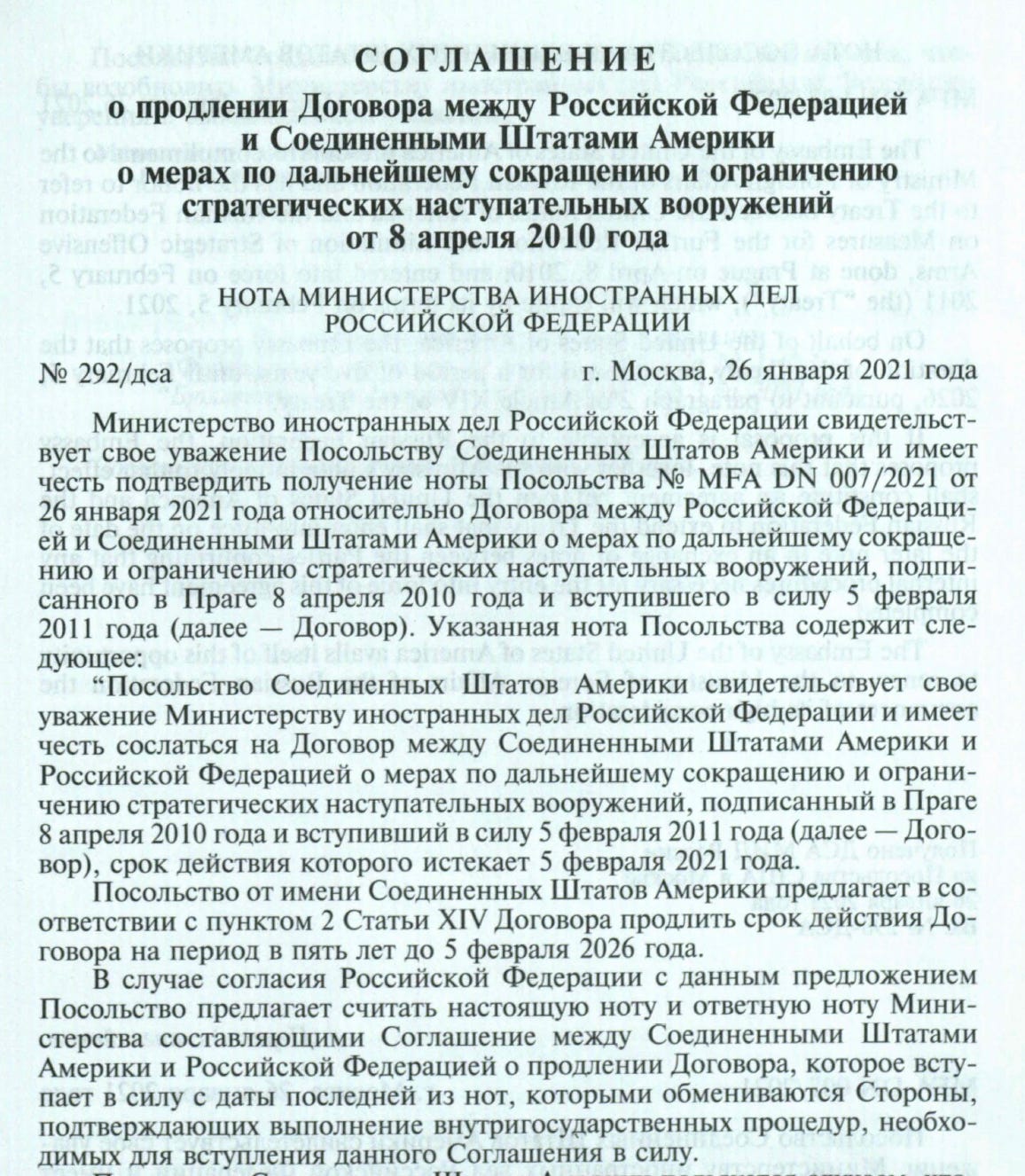
Recall that New START was originally going to expire on 5 February 2021, but was extended by the Biden Administration in Jan 2021 to 5 February 2026. The exchange of notes makes it clear the Treaty is extended up to (but not including 5 February (до 5 февраля 2026 года).
Do House Republicans care about arms control?
Rep Brian Mast (Chairman, HFAC) weighed in on 13 January 2026 with a letter to President Trump supporting work towards further arms control with Russia, while acknowledging Russian non-compliance (including suspending New START in 2023) and Chinese and DPRK refusal to engage on these topics.
Europe cares about arms control, but…
Articles are proliferating on the end of the era and prospects for the future. IFSH, Chatham House, VCDNP, IPS
https://ifsh.de/en/news-detail/what-happens-without-the-new-start-treaty
https://ips-journal.eu/topics/foreign-and-security-policy/new-start-old-risks-8822/
https://chathamhouse.org/2026/01/us-and-russias-nuclear-weapons-treaty-set-expire-heres-whats-stake
https://vcdnp.org/end-of-new-start/ and more.
Most call for the US to show restraint, or to throw the UK and France under the bus by forcing them into future arums control - although this seems hardly likely to get Russia back or China in, especially as the latter moves towards 1,000 warheads while France and China remain below 300 each.
They also call for European states to pressure the US, Russia - and occasionally China - in the NPT/P5 and bilats. But what exactly will that do with Trump, Putin, and Xi, exactly? I think China is the key, and they are neither listening nor interested.
And Chatham House says “the margin for error is already small,” but, like I said, there are a number of useful risk reduction agreements in place between the US and Russia, so that doesn’t mean much…
Hotline hype hype hype
Most of the papers call for hotlines to Moscow in Paris, London, and Brussels - which all have existed for decades. I find it disheartening that some of my favorite experts seem unable to google or at least to read what Steven Miller (the good one) put together in 2021.
Existing Russian hotlines include:
US, France, UK, China, NATO (SecGen and SACEUR)
Chinese hotlines include:
US, South Korea, India, Vietnam, Taiwan, and Japan.
Other hotlines include:
US-India, India Pakistan (two of those), DPRK-ROK (suspended), and Greece-Turkey.
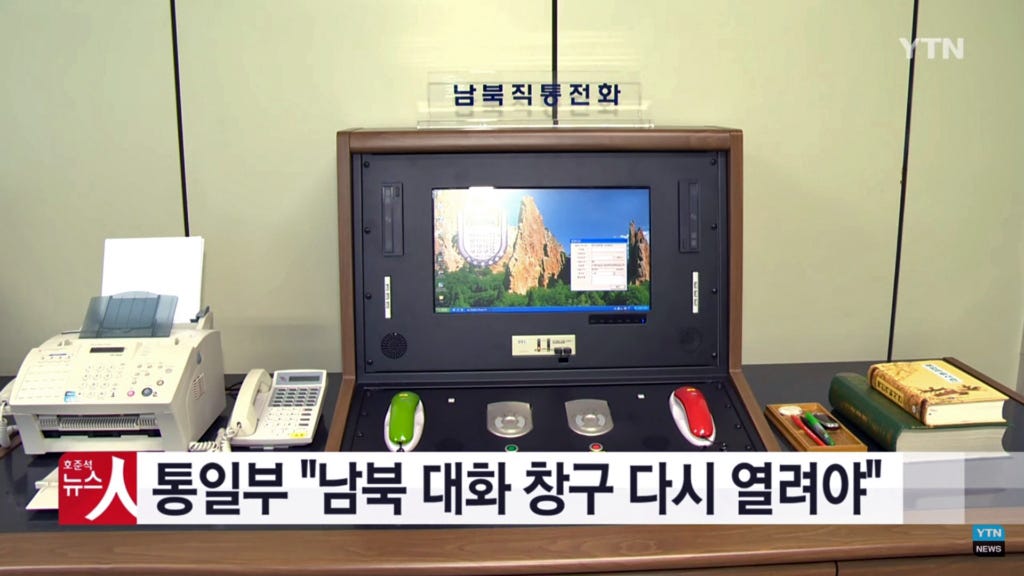
The results of many of these hotlines has been…mixed. See: Black Brant crisis, Brahmos missile crisis, the entire history of ROK-DPRK relations, and China’s spotty record on risk reduction.
I like hotlines, but they’re not a panacea, and if there’s an important bilateral relationship that you think needs one…maybe check first if one’s already in place.
There’s also Avoidance of Nuclear War Agreements between the UK and Russia and France and Russia, in addition to INCSEAs involving dozens of countries worldwide. I think the threat of a lack of agreements is overhyped.
But does Trump care?
In the meantime, Shane Croucher at Newsweek reported on 15 January Kremlin spokesman Peskov complaining that President Trump has not replied to Putin’s offer of a one-year politically-binding observation of the central limits of the Treaty (to 5 Feb 2027). Peskov said the US wants China involved in any new nuclear arms treaty, but he also quoted Putin saying that Russia cannot sign a new agreement without France and the UK arsenals included.
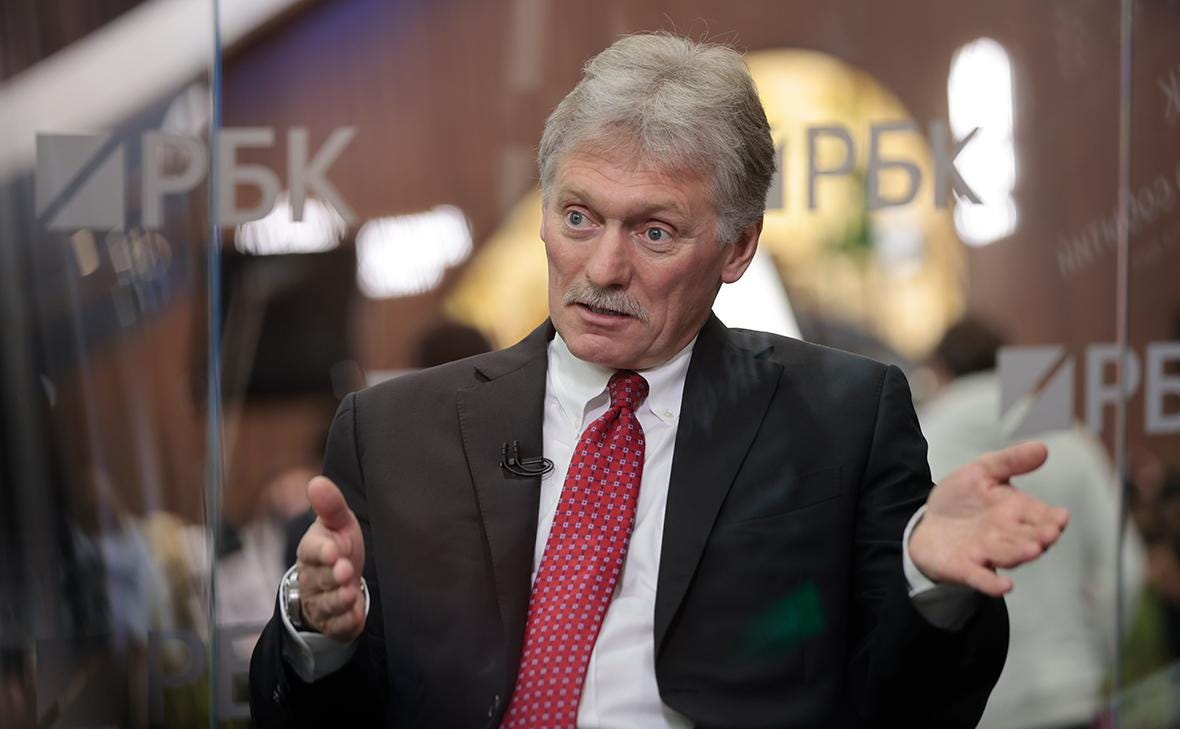
President’s Putin’s offer of extending the New START limits (with no information exchange or verification) for one year does not mean that Russia want to give time for negotiations - there is no evidence that this is the case.
Instead, from Russia’s behavior within arms control over the decades, this is the clearest sign possible that Russia is building up its nuclear arsenal beyond the New START limits, and that Russia assesses that the United States will detect that Russia has exceeded these limits no later than the end of next year.
And the Russian Foreign Ministry just announced that Russia are not bound by the New START limits anymore.
Thus, an extension of the Treaty limits now binds Russia’s risk in terms of a US breakout at least temporarily while it coils itself for a full breakout from New START limits in 2027.
Why should we really care?
One thing not many people are addressing is the actual threat from the end of bilateral arms control. Clearly, the US feels pressure from China’s massive and rapid nuclear buildup. Despite some rational voices, there will be pressure, as there was throughout the Cold War, to build up. And will that include US voices demanding that we match Russia + China + North Korea? Sure. Will Russia want to match the US + the UK + France? Will China want to match all the total of all of the above? What about India? Will India match China? And then Pakistan, will they match India? You see where this can go.
And let’s just do the math on the US submarine fleet. If we felt like uploading the current Ohio Class of 18 SSBNs to their full potential…well, right now, we have downgraded these subs from 24 missiles to 20, and each one of those missiles carries 1 warhead. So, the current fleet deploys a maximum of 360 warheads.
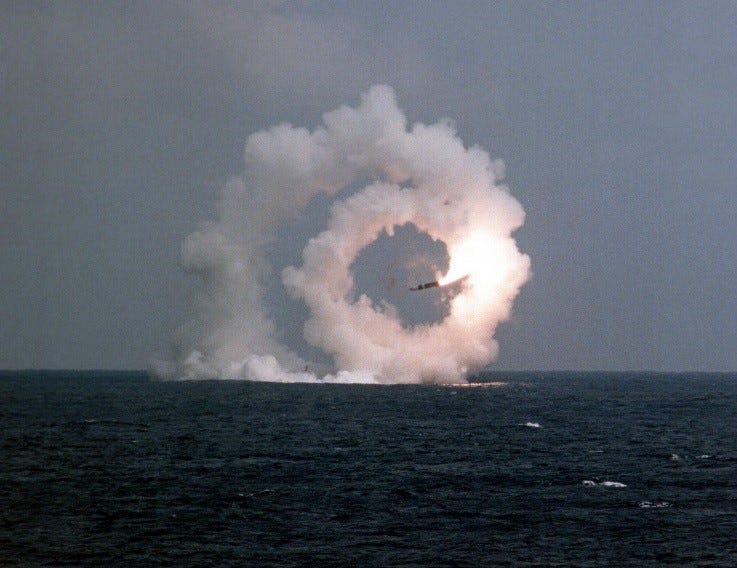
Yet each Trident II D5 missile can carry 10 or 12 warheads. Each. Which means we can plus each boat back up to 24 missiles, and each of those can have a maximum of 12 warheads for a total of…what, 4,320 warheads? Just on the subs. As for the Minuteman III ICBMs, we can go from 400 - if we MIRV them up to their maximum of 3 each - to 1,200 warheads.
Which means that if the US decided to race up to the highest total of warheads deployed it can, just counting SLBMs and ICBMs MIRV’d warheads, go from 760 warheads to 5,520.
The Russians, with their SARMAT, if it ever deploys, can carry 12 warheads - you get the idea. We could back to the US and Russia fielding 10,000 warheads each pretty quickly. And then China, and then India, Pakistan, North Korea, the UK, and France all under pressure to build up.
In conclusion?
All this to say - no prospects on the horizon, but you do know how Trump loves surprises. Update: Trump did not surprise anyone.